
Project Details
- Completed: November 3, 2026
A hole in a bathroom ceiling and peeling drywall tape in the closet next door were the only clues that water was moving inside the walls of this Raleigh, NC home. Our IICRC certified team at ProWorks Restoration tracked it down and handled the water damage restoration in Raleigh from the first reading to the final dry check.
Bathrooms get a free pass on water. A stain near the shower usually gets blamed on steam and forgotten. Sometimes that’s all it is. This time, it wasn’t.
What Did We Find on Our First Visit?
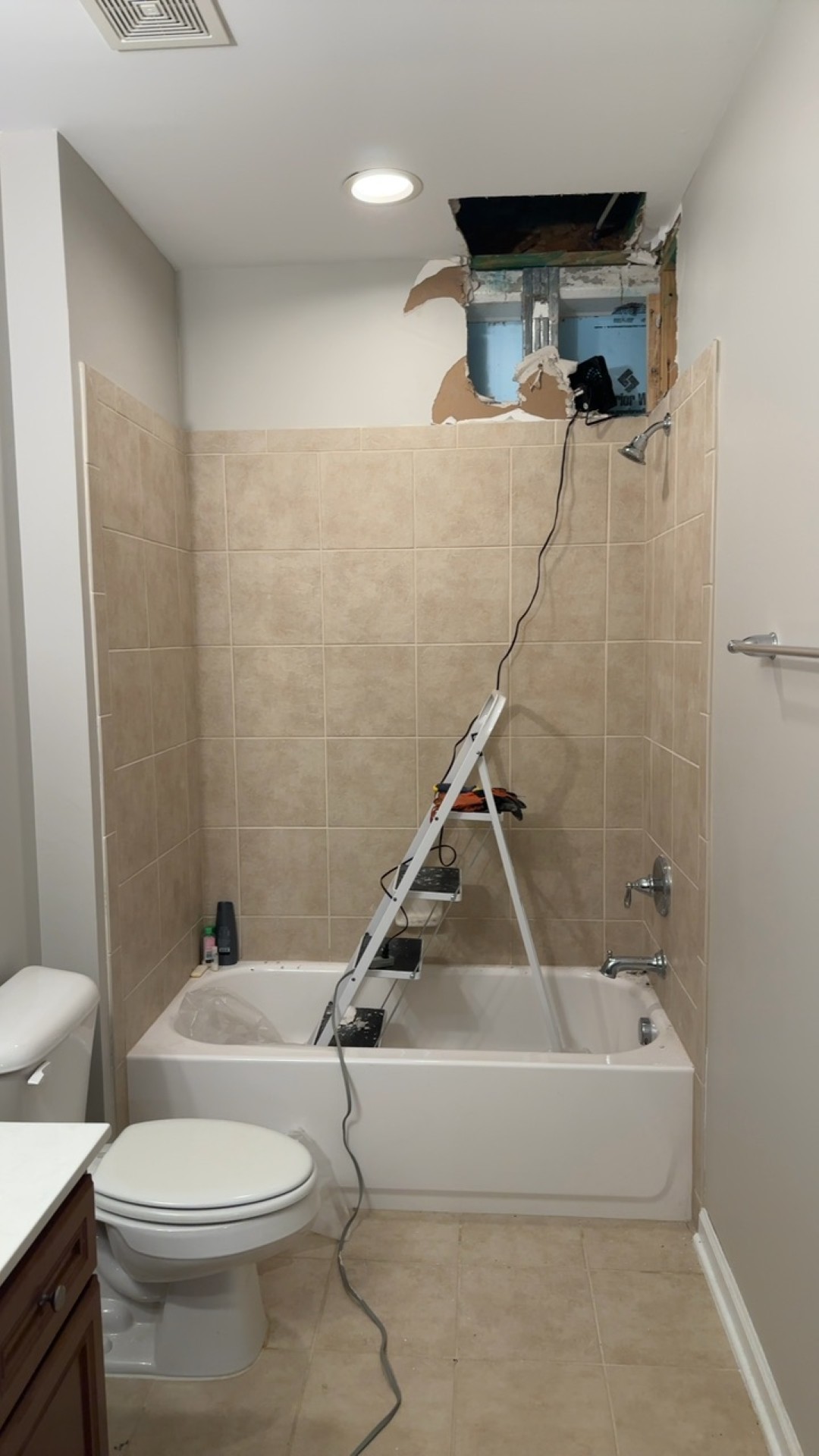
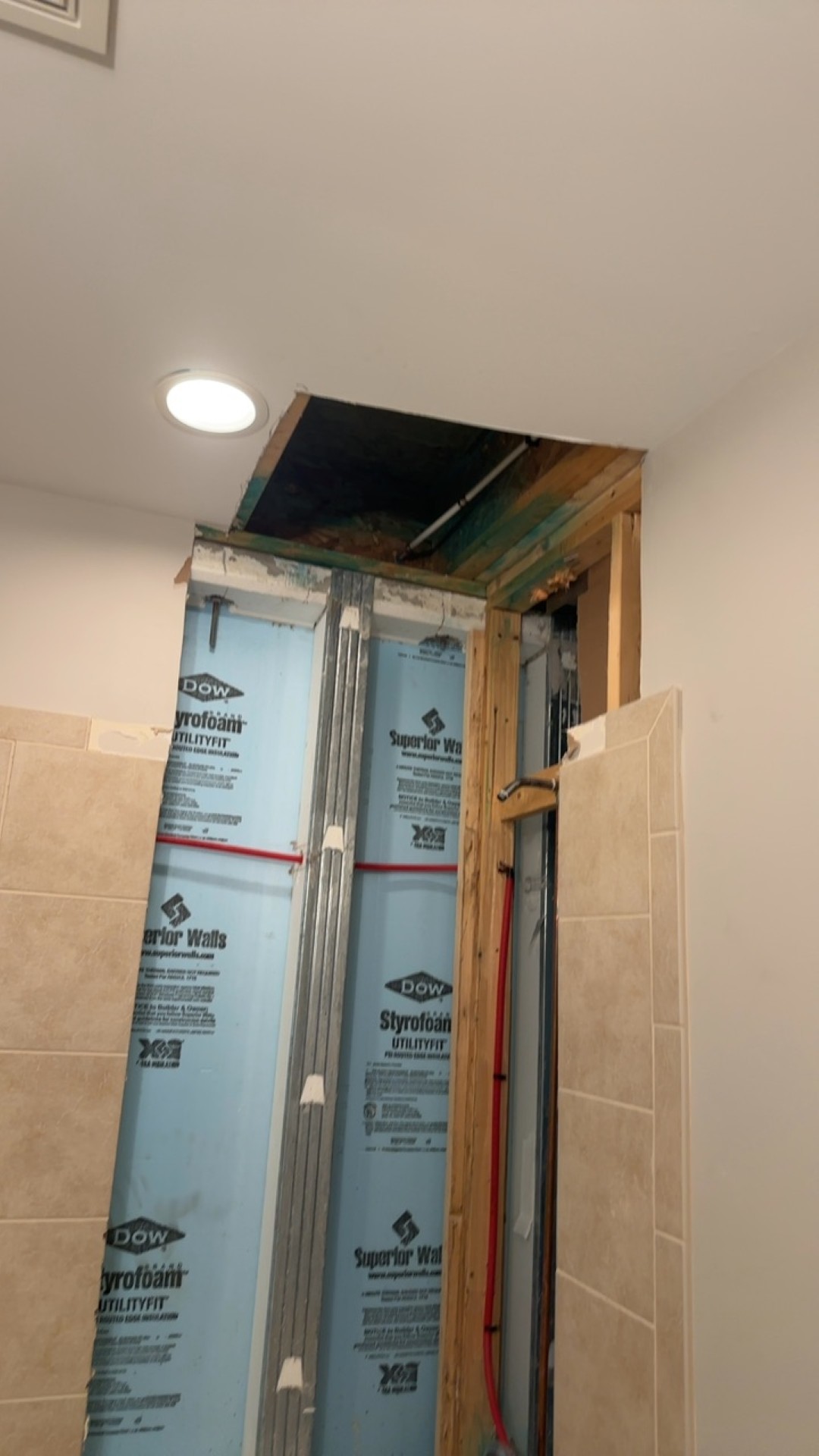
The damage showed up in two rooms that share a wall: the bathroom and the home office closet behind it. There was a hole in the ceiling above the tub and shower. In the closet, water stains and peeling drywall tape ran down one corner, right where the two rooms meet.
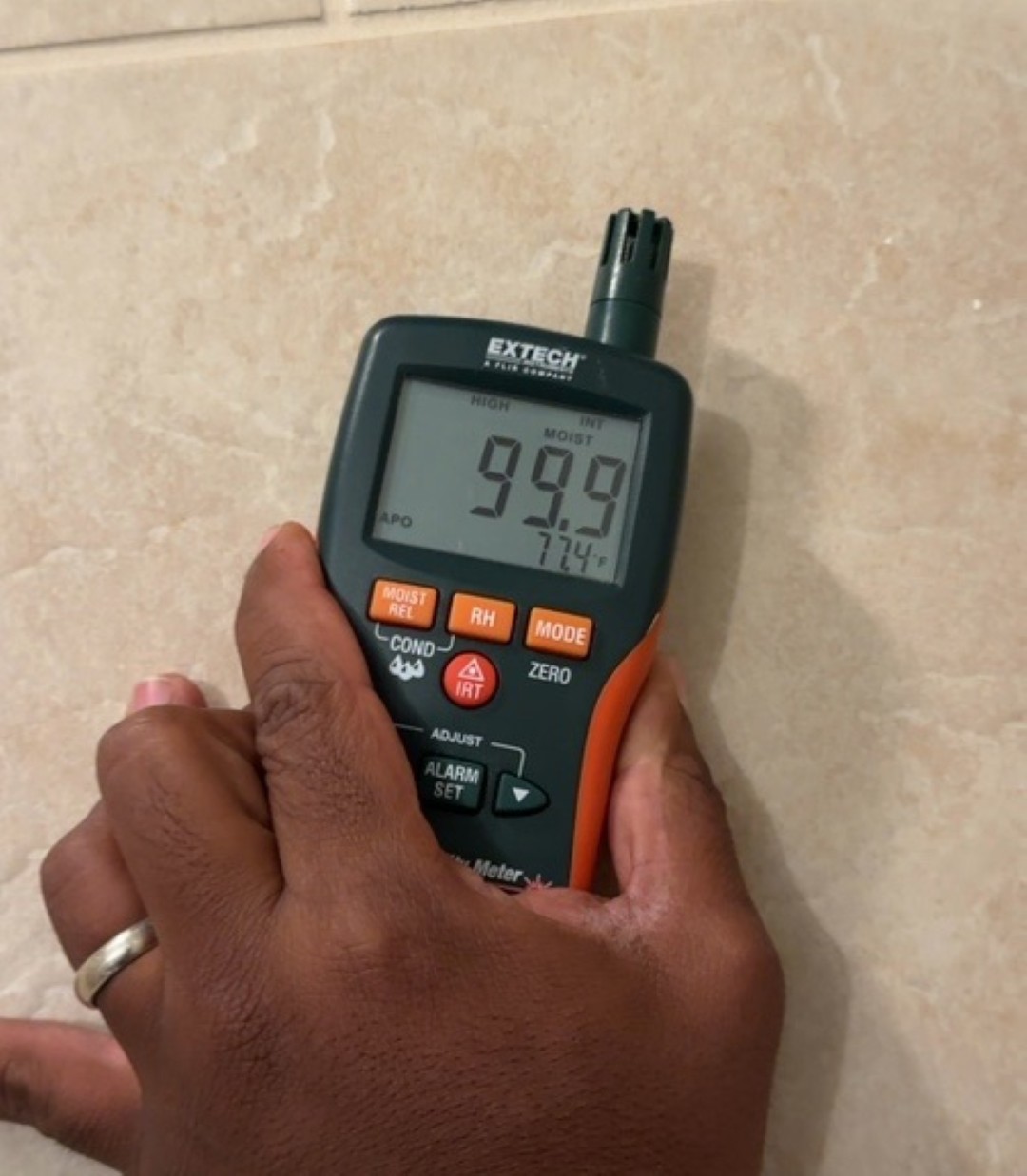
Then the meters weighed in. Our moisture meter maxed out at 99.9 on the shower tile, while a dry tile we used as a baseline read 18.5. That’s not shower splash.
What a Thermal Camera Actually Shows
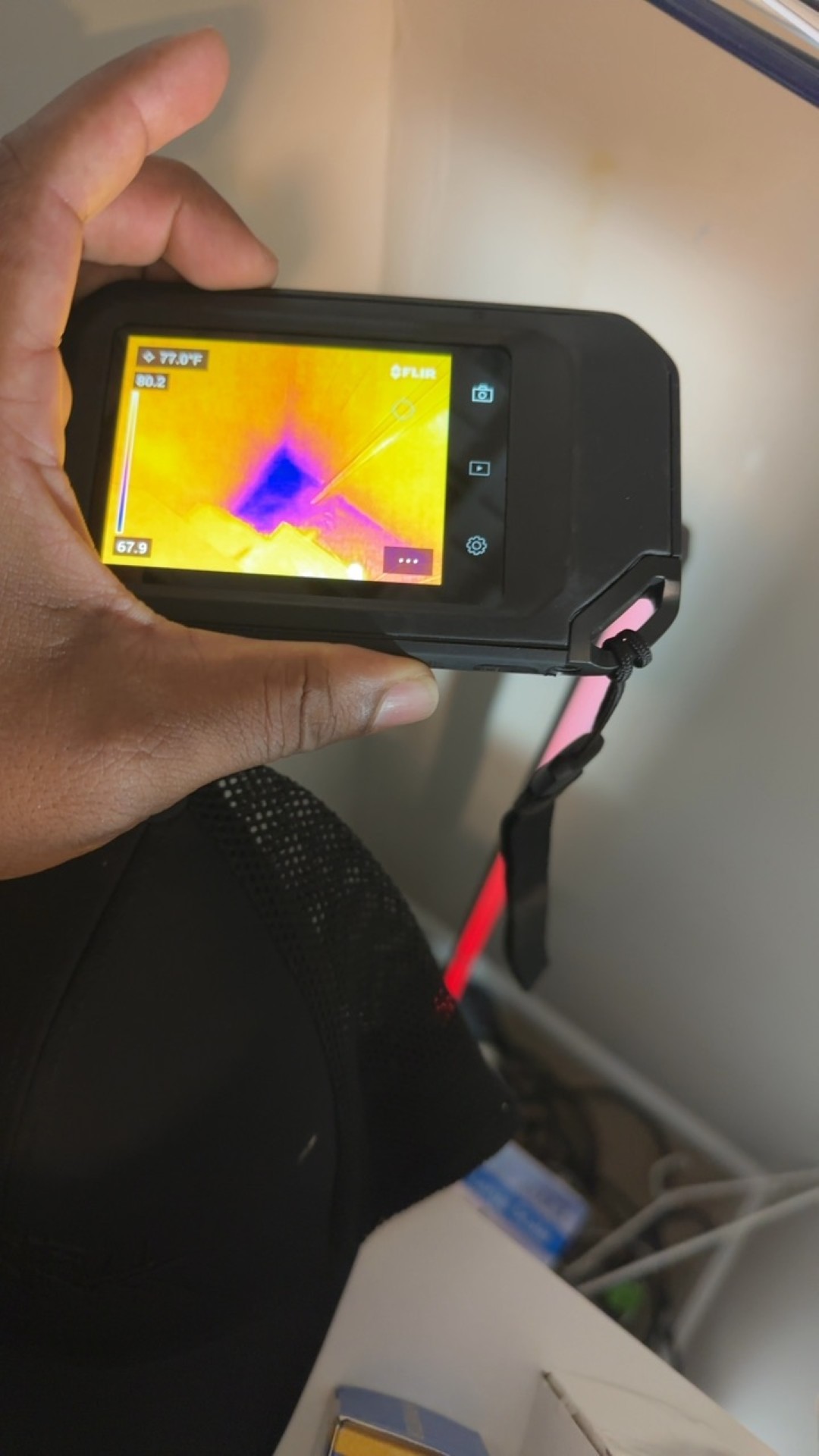
The thermal camera picked up a cold spot right where the closet wall meets the ceiling. Wet materials often read cooler because evaporation pulls heat off the surface. A thermal camera only shows temperature, though, so we always confirm a cold spot with a meter before calling it wet.
Here’s what we were looking at on that first visit.
 |  |  |
Where Was the Water Coming From?
Everything pointed to a plumbing leak inside the cavity above and behind the tub and shower, where the supply lines run. From there, the water worked its way down the shared wall and into the closet, soaking the carpet and pad on the way. Inside a wall, water almost always heads straight down.
Signs of a Hidden Leak Behind Your Shower
Hidden water damage behind walls rarely announces itself. Keep an eye out for:
- Stains, bubbling paint, or peeling tape on a wall that backs up to a shower
- A ceiling stain or soft drywall around the tub
- Carpet along a bathroom wall that feels damp or smells musty
- Cracked grout, or tiles that sound hollow when you tap them
How Did We Open the Walls and Dry Everything Out?
We protected the room first, then opened the walls so air could reach the wet framing inside. Drywall is great at hiding water and terrible at letting it go. Dry a closed wall from the outside and the surface can feel fine while the wood behind it stays wet.
Protecting the Home Office
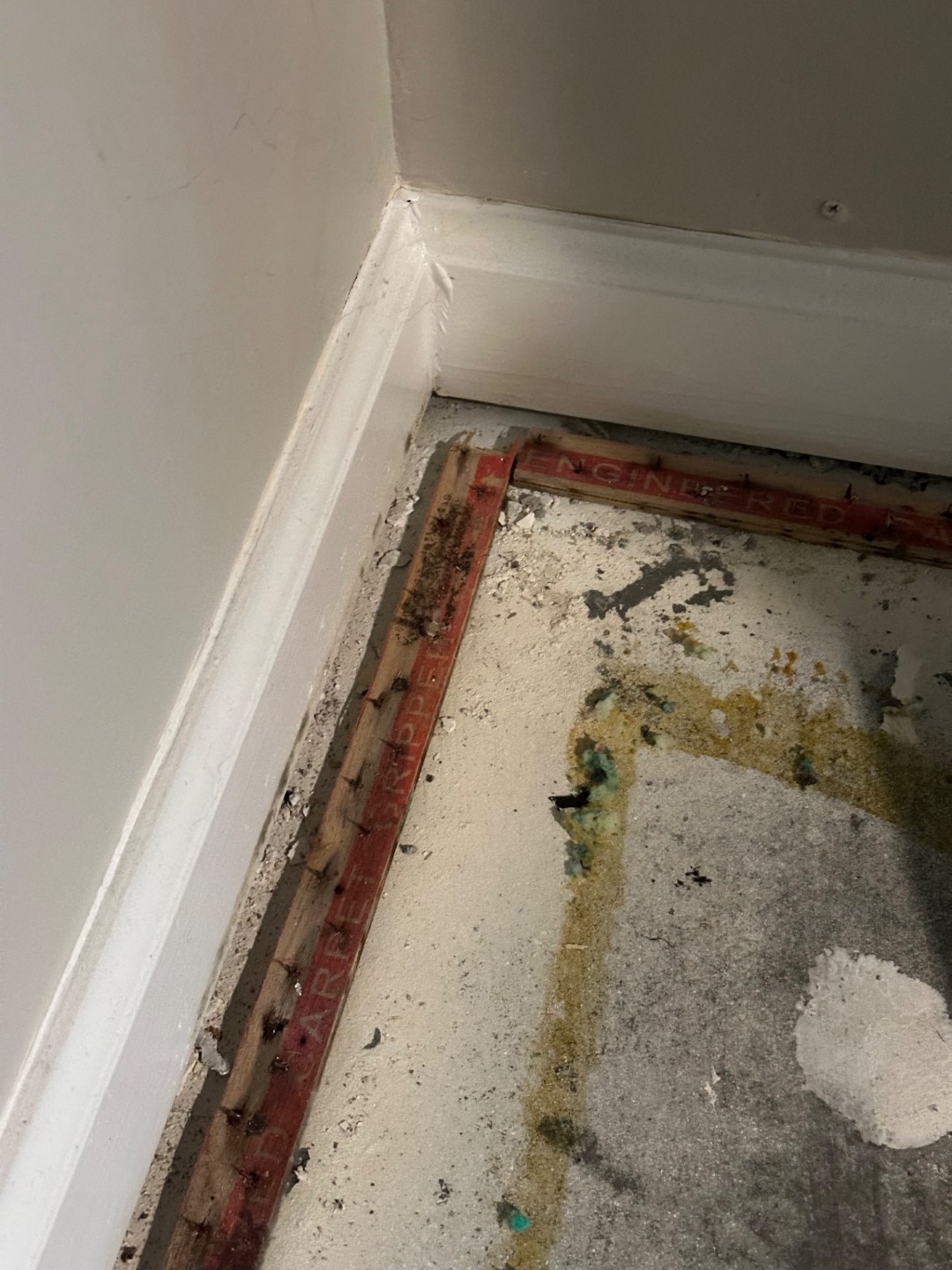
We wrapped the office furniture in plastic, pulled back the closet carpet, and removed the soaked pad underneath. Carpet pad holds water like a sponge, so it’s usually one of the first things to go.
Opening the Walls and Setting Up for Drying
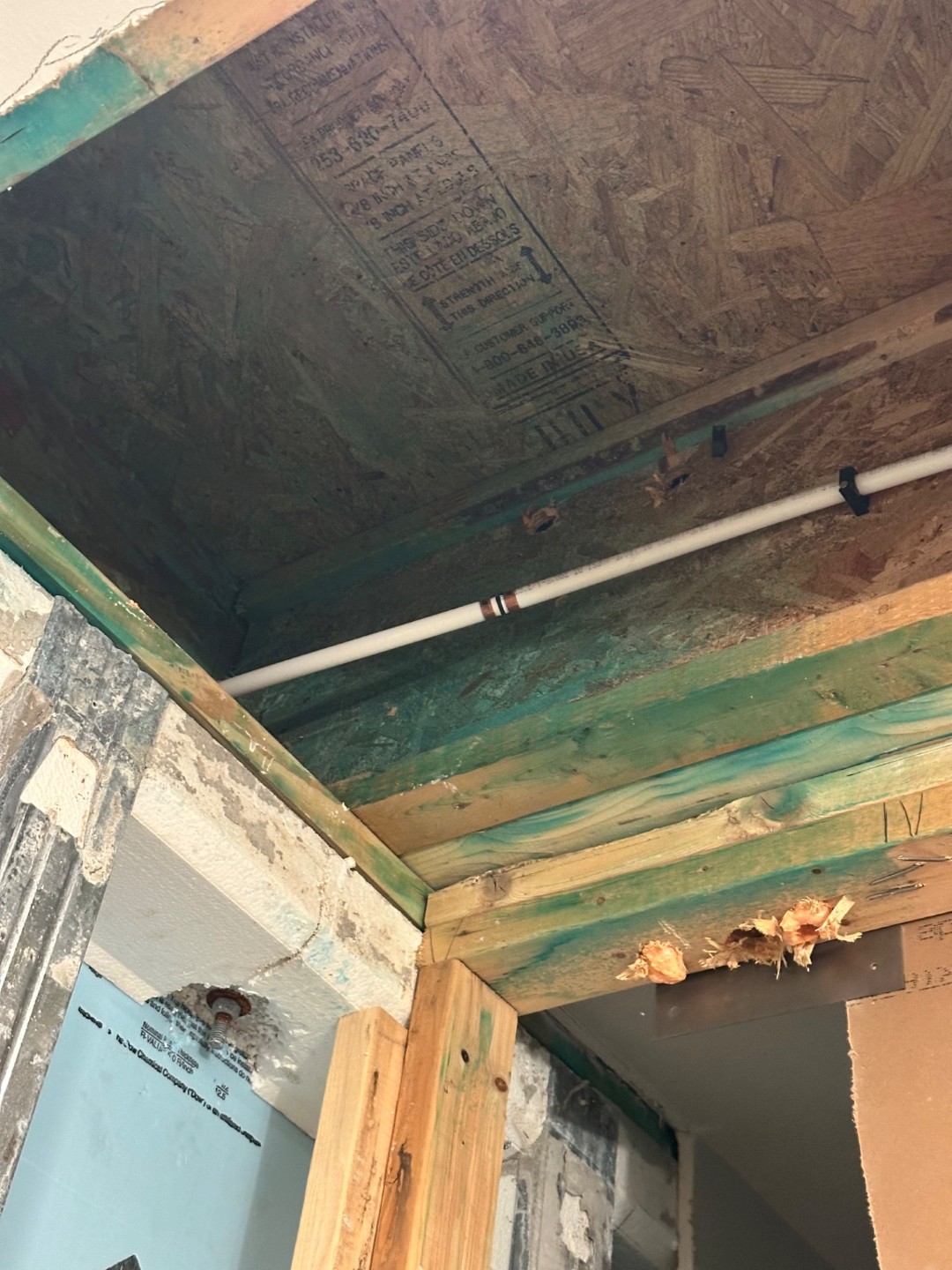
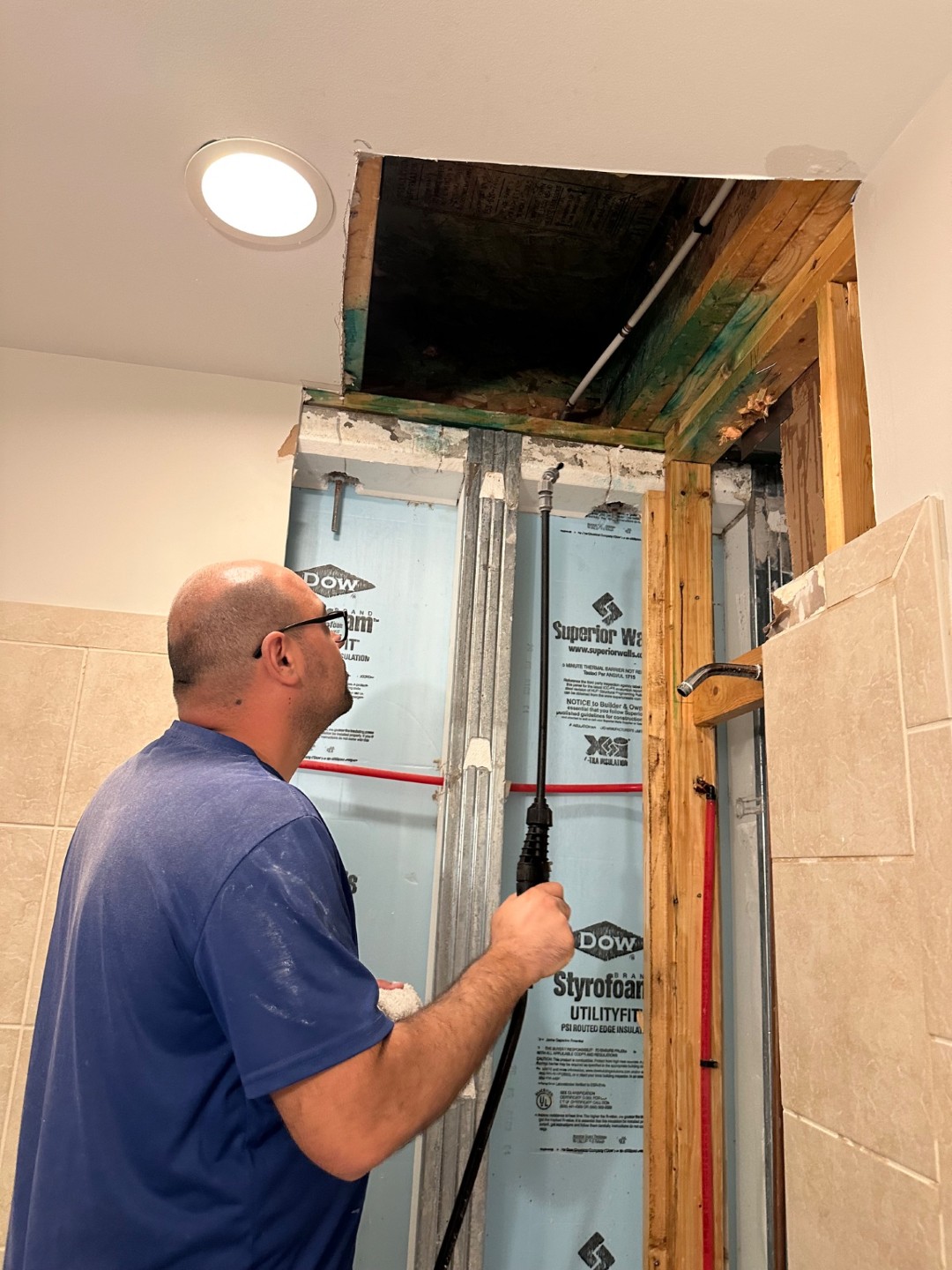
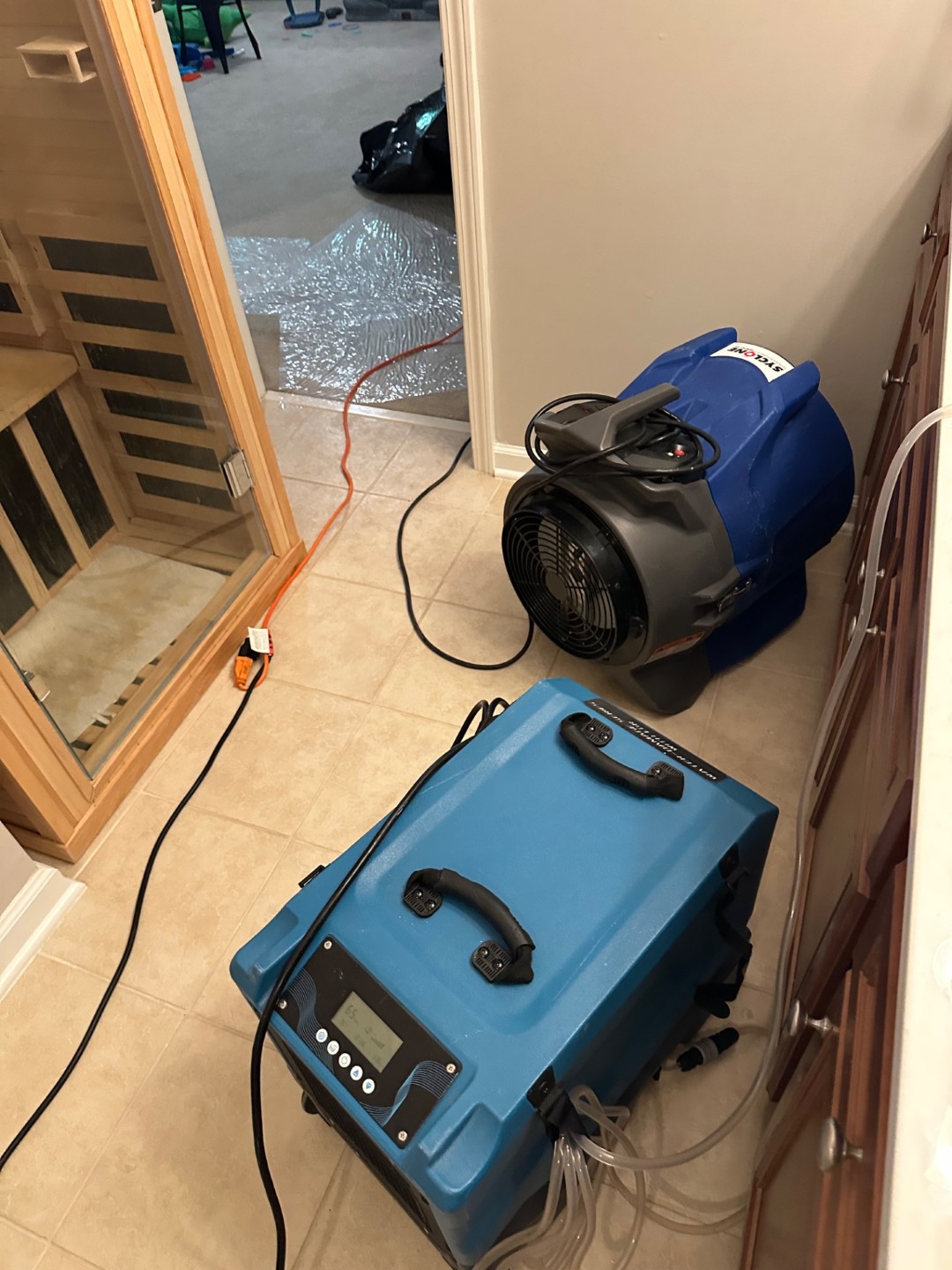
Next, we opened the closet wall, the shower’s end wall, and the cavity above the shower. That follows the thinking behind the IICRC water damage standards our team is certified in: dry the structure, not just the surface. Then we sprayed down the exposed framing and set air movers and LGR dehumidifiers in both rooms.
The pad coming out, the walls opening up, and the drying setup going in:
 |  |  |
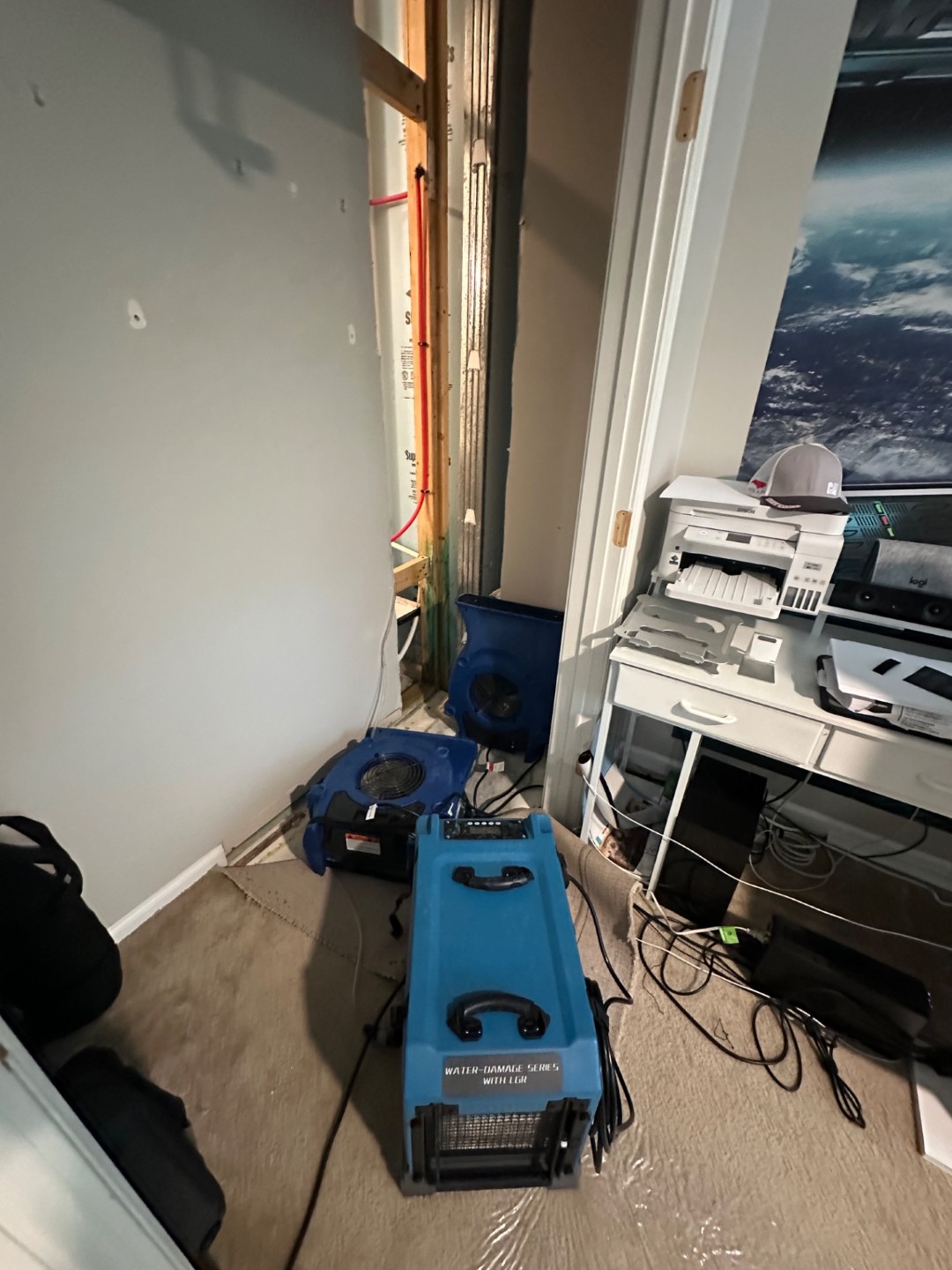 | 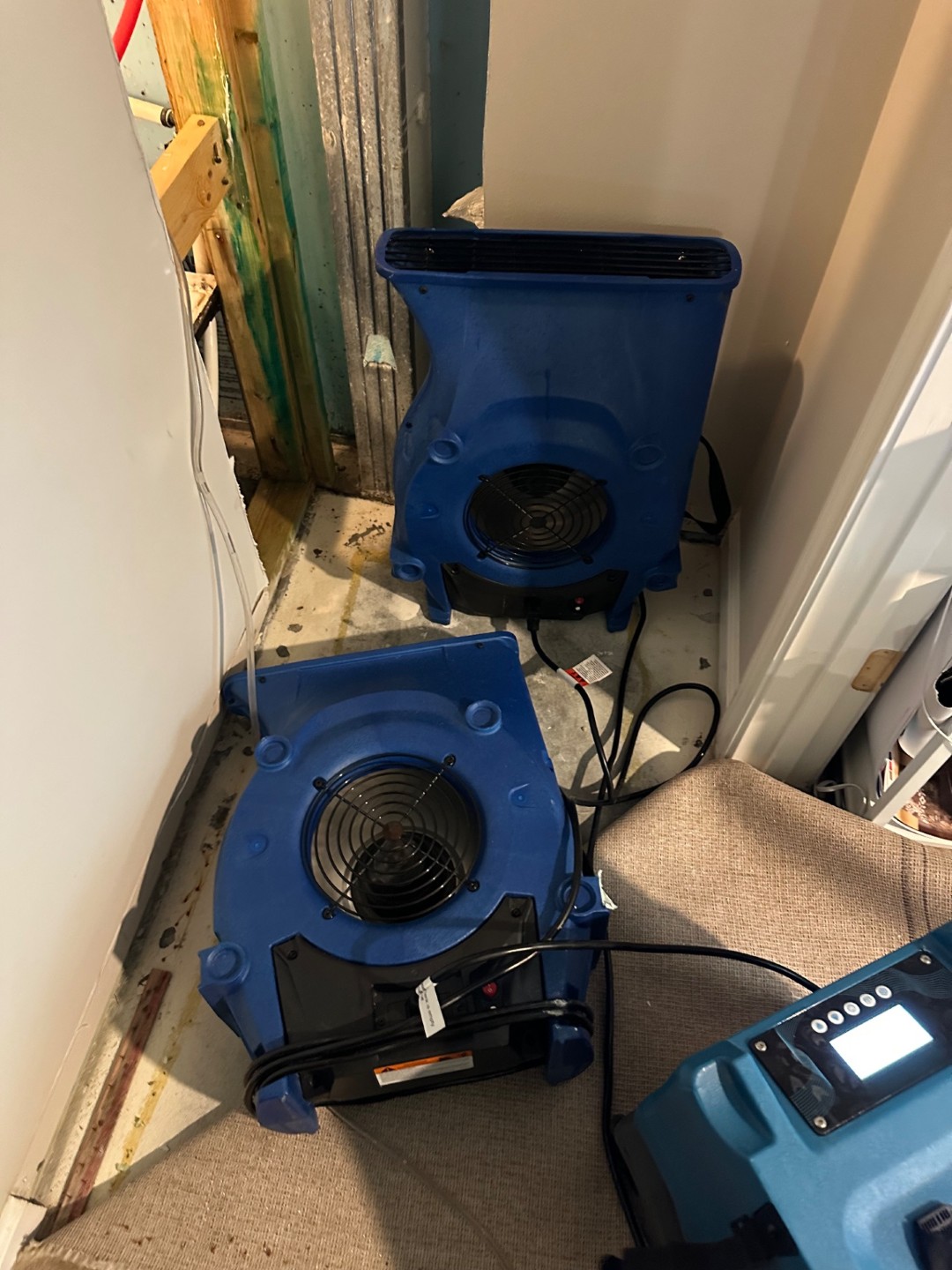 | 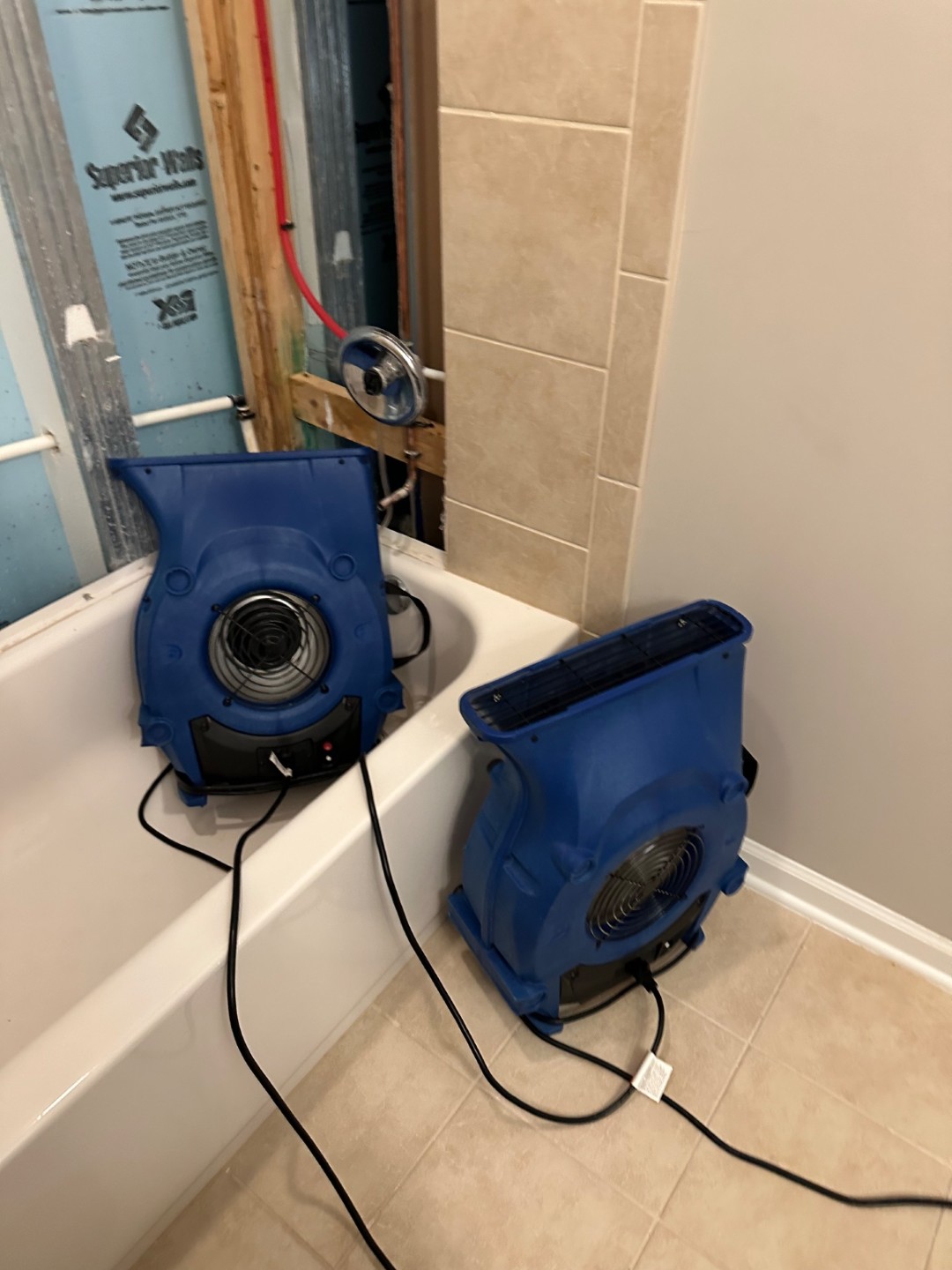 |
LGR stands for low grain refrigerant. These dehumidifiers keep pulling moisture out of the air even as it gets drier, and the air movers push that dry air across the wet wood. That pairing is the heart of structural drying and dehumidification.
How Did We Know the Framing Was Really Dry?
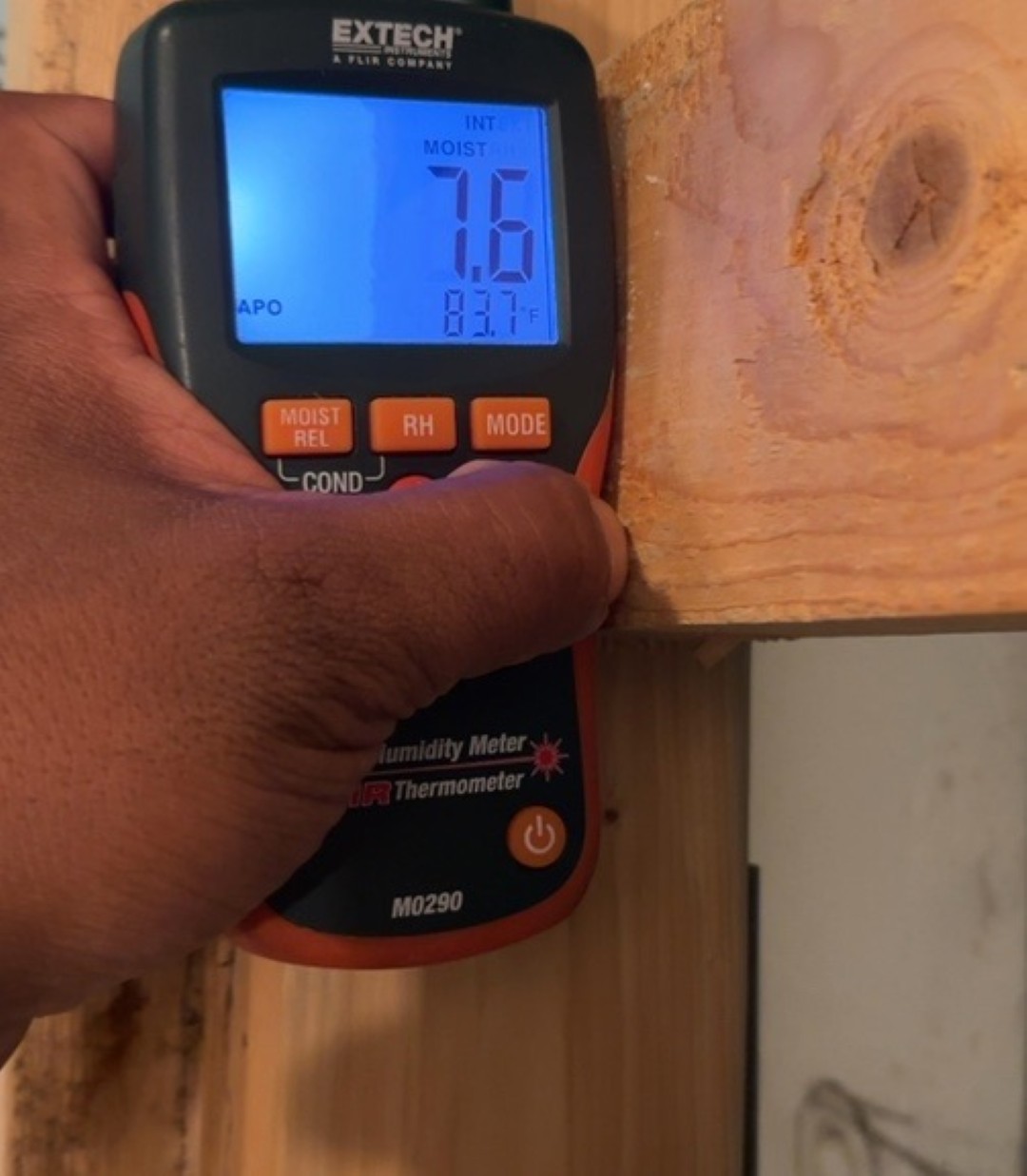
We knew because we measured the same spots on the framing again and again until the numbers dropped back into the dry range. One spot on the framing read 34.4 the day after setup. At the final check, four days in, that same spot read 7.6. The readings made the call, not the calendar.
Why fuss over a few numbers? The EPA’s guide to mold, moisture, and your home names the inside of walls around leaking pipes and the underside of carpet pads as common hiding spots for mold. Both were in play here, so opening the walls and pulling the pad wasn’t optional.
The last stretch of drying, the final reading, and the dried cavity above the tub:
 |  |  |
With the numbers where they needed to be, the equipment came out, leaving dry framing and open walls ready for repairs. If a home needs rebuilding, we line that up through a trusted repair partner.
A Quick Tip From Our Team
Spot a stain on a wall that backs up to your shower? Don’t just paint over it. Have it checked with a moisture meter first, because a stain can look dry while the drywall behind it is still soaked. Paint covers the stain, not the water.
Seeing Stains Near Your Shower in Raleigh?
If a wall near your shower is stained, peeling, or soft, get it checked before the water spreads any further. ProWorks Restoration is veteran owned, family owned, and rooted in the Triangle, with help available 24/7. We bring the meters. Then we explain what we find in plain language and work directly with your insurance company.
Questions We Hear a Lot
Can a small leak behind a shower really do this much damage?
Yes. A slow leak inside a wall can run a long time before anything shows, soaking the framing, the drywall, and even the floor in the room next door.
Do I call a plumber or a restoration company?
Often both. A plumber fixes the pipe, and we find and dry the water it left behind. Fixing the leak alone won’t dry out the wall.
Get Hidden Leak Detection Help
Serving Raleigh, Cary, Apex, Durham, Chapel Hill, and the rest of the Triangle.
Dealing With Property Damage?
This is the kind of job we handle every week. Get a fast, local response.