24/7 emergency water damage. On site within 60 minutes.
24/7 emergency water damage. On site within 60 minutes.
24/7 emergency service
A stain, a bulge or a drip from the ceiling means water has been sitting above it longer than it looks. We find where it came from, dry the ceiling cavity and insulation, and document it for your claim. 24/7. Call (910) 606-6161.
From above
A ceiling stain is the end of the story, not the beginning. The water has been moving for a while by the time you see it.
Toilets, tubs and showers draining into the room below.
Upstairs bathrooms are the most common source of a ceiling stain. Water finds a seam in the floor, soaks the subfloor and the ceiling drywall below, and shows up as a ring days later. We meter the floor above and the ceiling below, open what is saturated and dry the cavity.
Learn more →Toilets, tubs and showers draining into the room below.
Condensate overflow in July and August.
A failed tank draining through every ceiling below it.
Stains that grow after every heavy rain.
Second-floor plumbing runs.
Sudden sources usually are.
Scope and pricing
What we don't do: the source repair or the rebuild. We find the water, dry the cavity and document it. Replacing the drywall and paint is scoped separately once the framing is dry.
Inspection and moisture mapping are free. If it is an insurance loss, we write the estimate in Xactimate, the same software your adjuster uses, and bill the carrier directly; you pay your deductible and nothing else unless the carrier denies part of the scope, and we tell you that before we do the work.
For out-of-pocket jobs you get a written estimate before we start. Some written estimates on larger non-insurance jobs carry a fee that is credited back if you hire us.
Rebuild after drying is scoped and quoted separately from the mitigation work.
How it works
You talk to the technician coming out. On site within 60 minutes, 24/7.
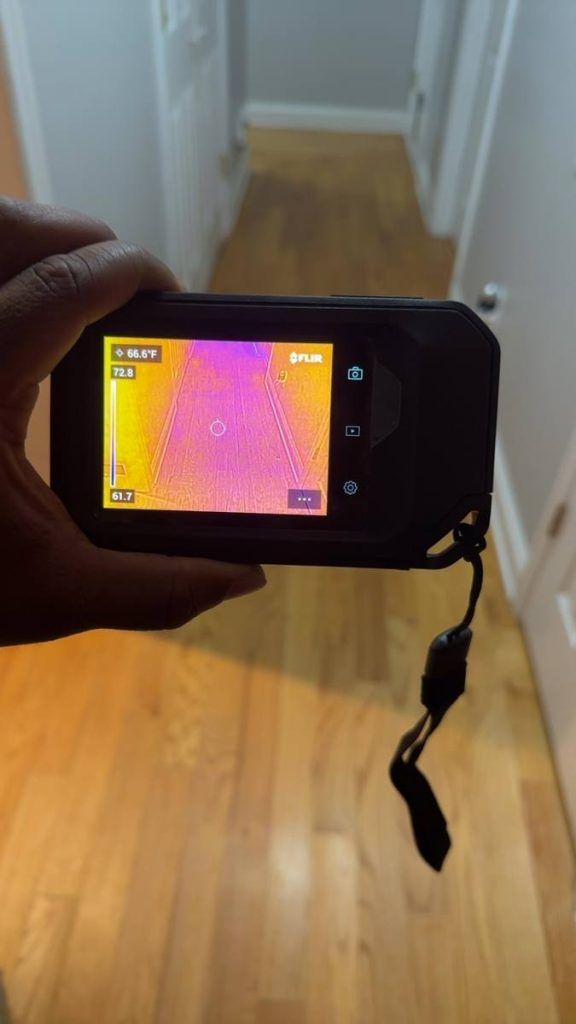
Moisture meters and a thermal camera find every wet material, including inside walls and under floors. Photos start here.
Standing water out, unsalvageable material removed, containment and air scrubbers up if the loss needs them.
LGR dehumidifiers and air movers sized to the loss. Daily readings until materials hit dry standard, usually 3 to 5 days.
Drying logs, photos and the Xactimate estimate go to your adjuster, so any rebuild is scoped against the claim.
You get a call from the person driving, not an automated text.
Call (910) 606-6161Insurance
It depends on the source. Sudden leaks and overflows usually are; long-term roof wear usually is not.
The ceiling damage is what the claim pays for; the source is what decides coverage. An overflow, a failed tank or a burst line is a sudden loss. A roof that leaked for months is usually treated differently. We document the source and the moisture so the claim is decided on facts. We cannot promise how a carrier will rule.
We write the estimate in Xactimate, keep daily drying logs and photos, meet the adjuster on site, and bill the carrier directly. How we handle insurance claims
1. Call us first so the drying starts.
2. Call your carrier and open a claim.
3. Send us the claim number and adjuster name.
We do the rest.
We photograph and meter everything before anything moves, so the loss is on record.
Drying starts the same day. You open the claim; we send the estimate and logs.
On site, with the Xactimate scope. Direct billing; you pay the deductible.
Recent work
Real water damage jobs in the Triangle, photographed by our crew.
Reviews
29 Google reviews from Raleigh-Durham homeowners, 5.0 average.
60 minutes
Emergency response
5.0 ★
29 Google reviews
IICRC
Water and mold certified
Insured
Liability coverage on file
Veteran-owned
Family and locally owned since 2025


FAQ
The ceiling is bulging. What do I do?
Turn off whatever is feeding it if you know the source, photograph it, then put a small hole in the low point with a bucket underneath. A controlled drip is better than a collapse. Then call.
Does the whole ceiling have to come down?
Usually not. Saturated or sagging drywall comes out; damp, sound drywall can often be dried in place. We meter it before deciding.
How do you know where the water came from?
Stain shape, whether it grows during rain or during showers, what sits above it, and a thermal scan of the cavity. We follow the moisture back to the source.
Will the stain go away when it dries?
No. A dried stain still needs sealing and paint, which is part of the rebuild. Our job is making sure the cavity behind it is dry so the new ceiling does not stain again.
How long does drying take?
Ceiling cavities with wet insulation usually take 3 to 5 days with equipment in place and daily readings.
Do you charge for the inspection?
No. Moisture mapping and a thermal scan are free. If you need a written estimate for a non-insurance job, we say up front whether there is a fee.
Call or text and the owner answers. If it is an emergency, say so and we roll.
Call (910) 606-6161